

Protein in Vegetables and Fruit - The Quiet Contribution

When people think about protein, the focus usually lands on meat, fish, eggs, or protein powders. Vegetables and fruit rarely get a mention. But many plant foods contribute small but meaningful amounts of protein, and when eaten consistently across the day, those contributions add up more than people expect.
And to be clear, they’re not meant to replace your primary protein sources. But clinically, they do still count.
Vegetables: Not Protein Powerhouses, But Not Nothing Either
Vegetables like peas, edamame, broccoli, brussels sprouts, mushrooms, corn, and even potatoes contain modest amounts of protein. No single serve is doing the heavy lifting, but together they support overall intake, particularly in people who eat a wide variety of plant foods.
This is one of the reasons I encourage building meals around plenty of vegetables because:
-
You’re getting fibre for gut health
-
Micronutrients and antioxidants for recovery and resilience
-
And a quiet background contribution of amino acids
Vegetables support the context in which protein is used well (digestion, inflammation control, and metabolic health) not just the gram count.
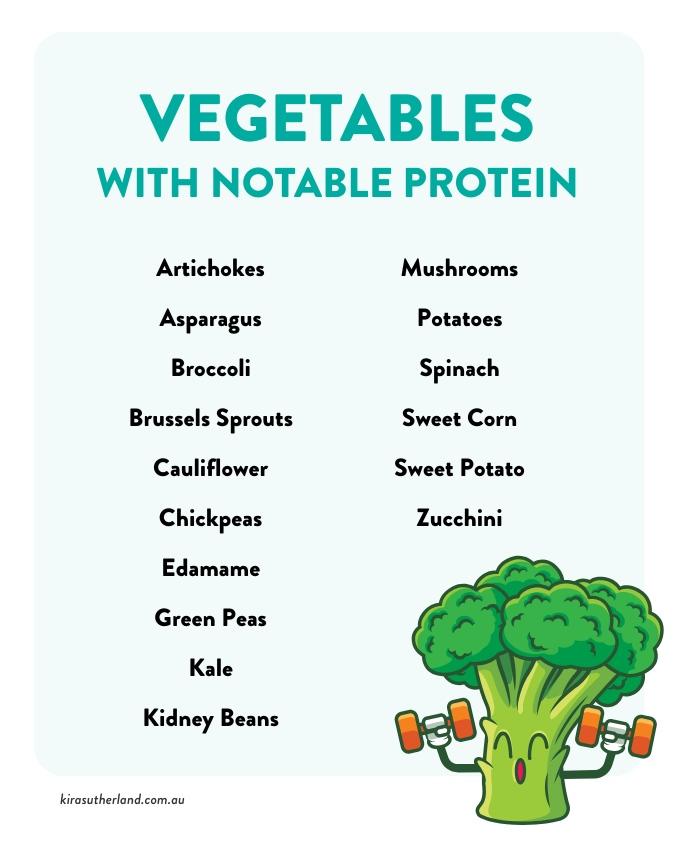
Fruit: A Small Protein Bonus Most People Don’t Expect
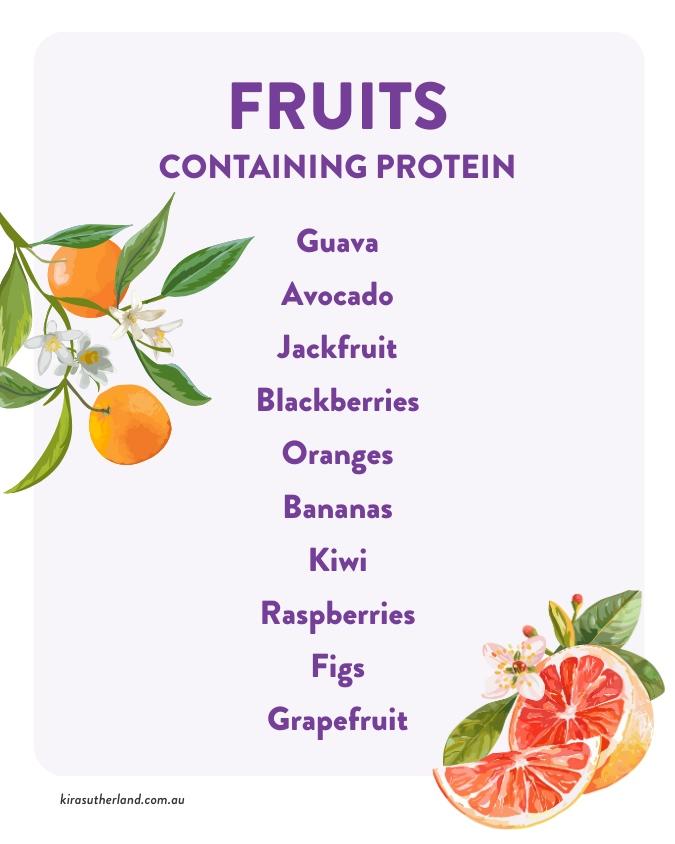
Fruit isn’t something I’d ever describe as a protein source, but some fruits do contain more protein than people realise. Again, these aren’t headline numbers, but they contribute.
Here are a few examples (approximate amounts):
🍊 Guava: ~4.2g protein
🫐 Blackberries: ~2g
🍊 Oranges: ~1.7g
🍌 Bananas: ~1.3g
🍓 Raspberries: ~1.5g
🥝 Kiwi: ~2.1g (per 2 fruit)
🍈 Jackfruit: ~2.8g
🥒 Figs: ~0.8g (fresh)
🍊 Grapefruit: ~1.8g
🥑 Avocado: ~3g (per medium avocado)
What matters clinically isn’t that fruit is “high protein” (it isn’t) but that whole foods deliver multiple nutrients at once. Fibre, vitamins, phytonutrients, hydration… and yes, a small side-serve of amino acids.
The Bigger Picture
Protein adequacy is about total intake across the day, not perfection at every meal. Vegetables and fruit won’t replace your main protein sources, but they absolutely support a diet that’s:
- More nutrient-dense
- More gut-friendly
- More metabolically supportive
- And easier to sustain long-term
It’s another reminder that food rarely does just one job. Whole foods work in layers and those layers matter when you’re training, recovering, or simply trying to nourish your body well.
—
Kira Sutherland
Naturopath | Nutritionist | Herbalist
Uberhealth

Want Clearer Guidance on How to Fuel Your Training?
If you’re training regularly and want more structure around what to eat, when to eat, and how to fuel for performance and recovery, my Fuelling for Fitness course walks you through it step by step.
It’s a 7-week, self-paced sports nutrition program with clear education, meal plans, recipes, and practical tools designed to teach you how to:
- fuel before training;
- recover properly after sessions;
- get carbohydrates, protein and hydration right;
- build meals that actually support your training load; and
- fuel for fitness without the confusion or conflicting advice.
Learn more here:
https://www.kirasutherland.com.au/fuelling-for-fitness

FREE RESOURCE
PROTEIN & CARB GUIDE
