

Protein: When More Is Not Better

Protein tends to get talked about in extremes. Either people are worried they’re not getting nearly enough, or they’re pushing intake higher and higher because “more protein = better results”. Clinically, neither end of that spectrum works particularly well.
Like all macronutrients, protein has a therapeutic range. Too little and the body struggles to function optimally; too much and other systems start carrying the load. Here are some of the signs and symptoms to consider when trying to balance protein intake.
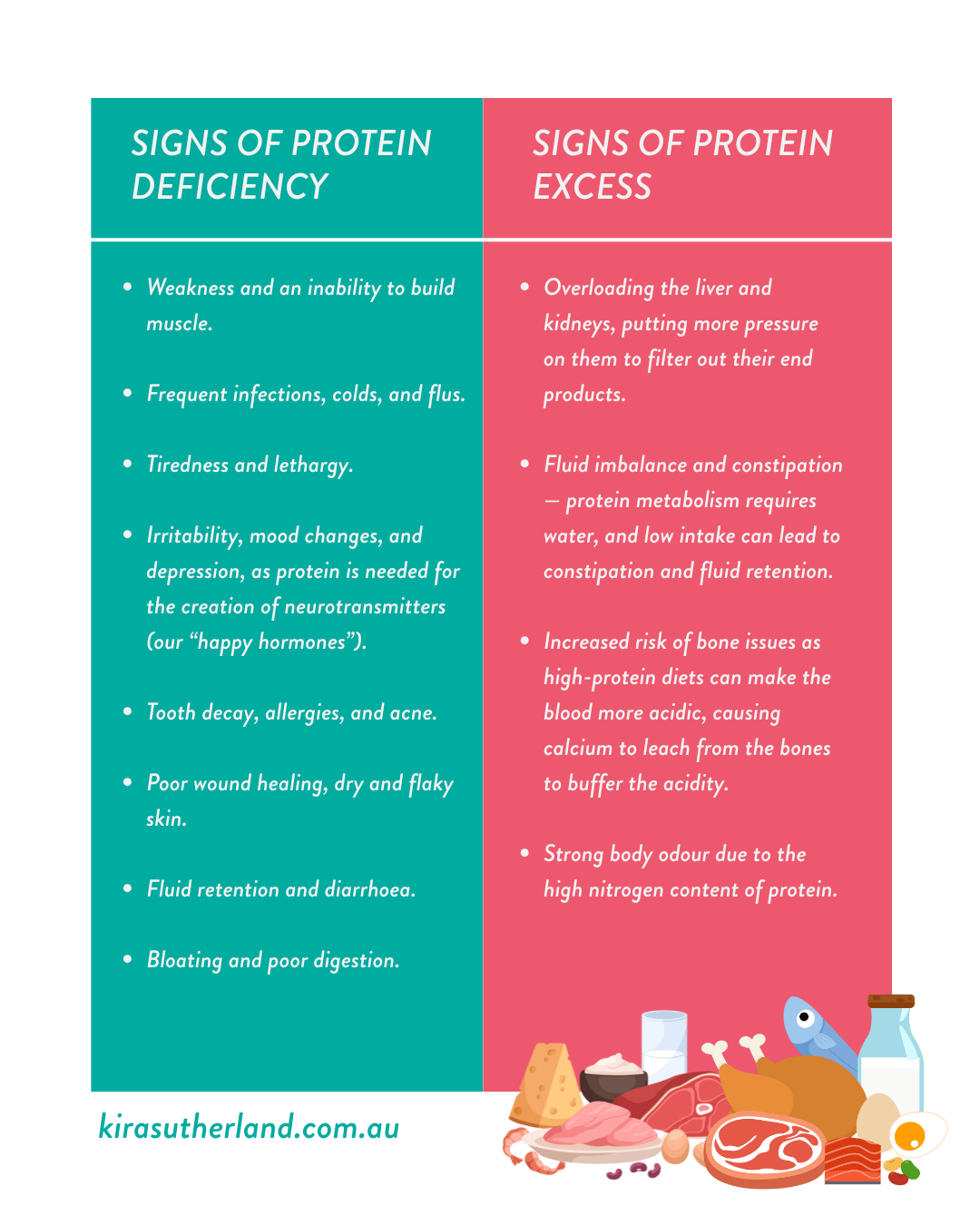
When Protein Intake Is Too Low
Low protein intake can show up as:
- Difficulty building or maintaining muscle
- Frequent infections, colds, or slow recovery
- Persistent fatigue and low energy
- Mood changes, irritability, or low mood (protein provides amino acids needed for neurotransmitters)
- Poor wound healing, dry or fragile skin
- Digestive symptoms like bloating or diarrhoea
- Fluid retention and poor tissue repair
When Protein Intake Is Too High
At the other end, chronically high protein intake (especially without adequate fluids, fibre, or balance) can place strain on the system. You may notice:
- Increased workload on the liver and kidneys to process nitrogen waste
- Constipation or fluid imbalance when hydration is inadequate
- Digestive sluggishness
- Stronger body odour related to nitrogen metabolism
- In some cases, increased bone stress when diets are highly acid-forming and poorly buffered
The Clinical Sweet Spot
Protein is structural, immune-supportive, and essential for hormone and neurotransmitter production. It's not just for building muscle. So, what I look for in practice isn’t maximum protein, it’s appropriate protein.
Appropriate protein depends on:
- Body size and lean mass
- Training load and type
- Age and life stage (including perimenopause)
- Digestive capacity
- Total energy intake
- Carbohydrate availability (yes, they’re connected)
Protein deficiency and protein excess can look very different, but both move the body away from balance.
More isn’t always better.
Less isn’t always safer.
The goal is "right-for-you" intake, supported by digestion, hydration, and overall energy balance.
When protein is balanced with adequate carbohydrates, fats, fluids, and micronutrients, the body uses it efficiently for repair, strength, resilience, and metabolic health. That’s where protein does its job properly without creating new problems along the way.
For Practitioners Wanting To Learn More
This balance between protein adequacy, metabolic load, hormones, digestion, and overall energy intake is explored in detail in my Applied Weight Loss Nutrition lecture series. Across 5 lectures, I teach beyond macro rules and into physiology-led, real-world strategies you can apply confidently with clients, including how to set protein targets that support fat loss without compromising gut health, hormones, or long-term metabolic function.
Find out more:
https://www.kirasutherland.com.au/applied-weight-loss-nutrition

FREE RESOURCE
PROTEIN & CARB GUIDE
